
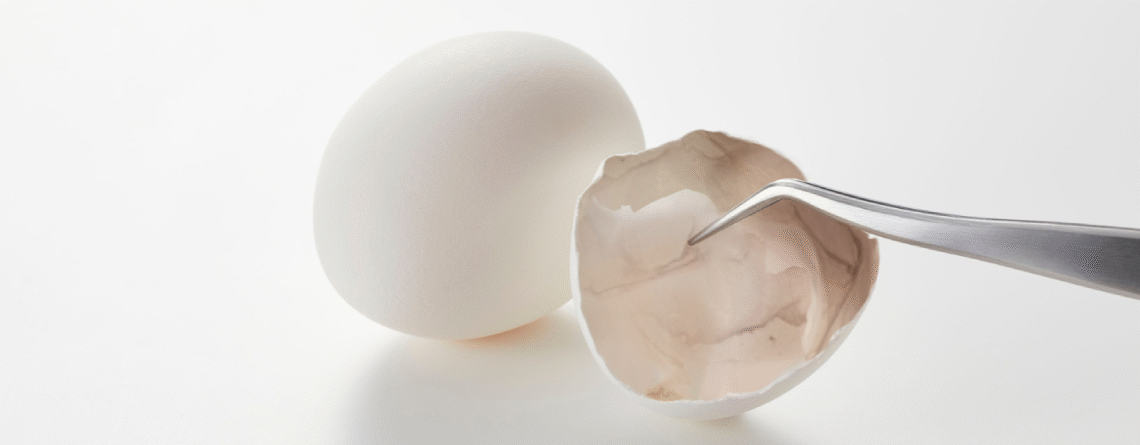
Collecting Eggshell Membrane Samples for Chicken DNA Tests
While our chicken DNA tests typically use blood or feather samples, eggshell membrane sampling can be a helpful alternative. This guide will explain why you might want to use eggshell samples and how to collect their DNA.
Why use eggshell membranes?
Eggshell membrane sampling is ideal when you want to test chicks immediately after hatching (without waiting for feathers to develop) or prefer a less invasive approach than blood sampling. Basically, you will extract DNA from the blood cells that remain on the membrane.
However, this sampling method is only useful if you have an incubator that keeps each egg separate so you can link each chick to its shell. It’s also slightly trickier than blood or feather samples to get the right sample for the test, so this method may be for more advanced users.
How to collect eggshell membrane samples
For each sample, clean or change gloves, and use a new disposable razor blade and toothpick.
1. Fully dry the membrane
After a chick hatches, mark the shell and set it aside to dry for 24 hours.
2. Store the membrane
Once the membrane is dry, place it in a sealed zip-lock bag or small container. Avoid touching the inner membrane to prevent contamination, and clean or change gloves between samples.
3. Label the sample
Label the bag/container with the chick’s ID information (e.g., hatch date, breed, genotype). We recommend proceeding with the DNA extraction within a week of sample collection.
4. Find a suitable section with blood vessels
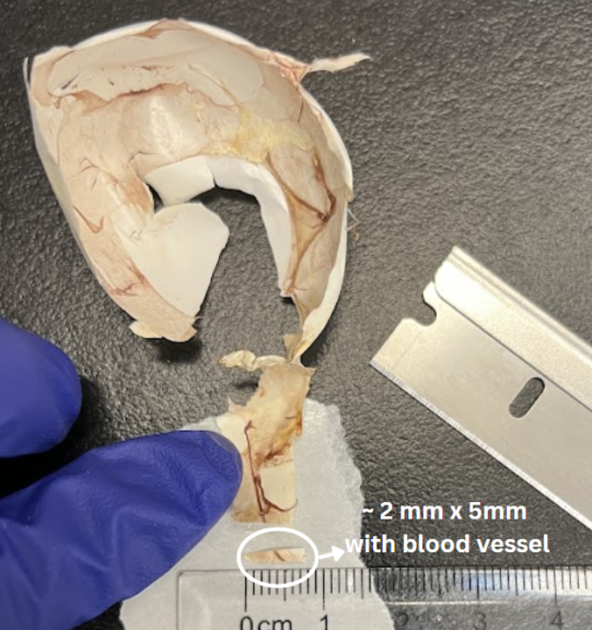
Peel the membrane from inside the shell using sanitized tweezers. It should look like a thin layer covered in blood vessels (and when dry, it can be thin and brittle).
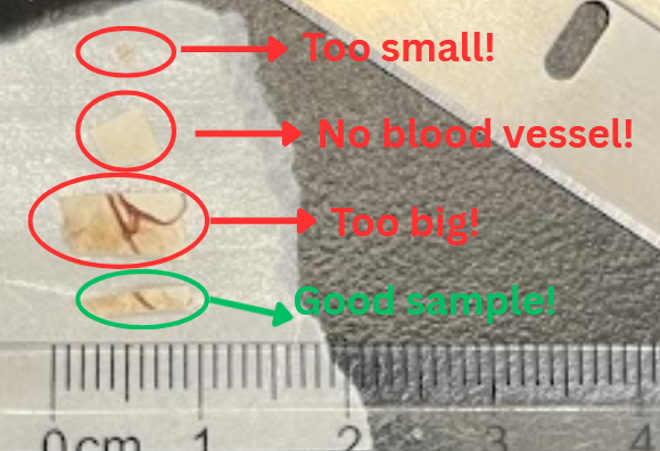
Examples of egg shell membrane samples for DNA extraction.
5. Extract the section of DNA
Cut a thin slice from the membrane using a razor blade or tweezers. The piece should be about 2 mm by 5 mm and contain visible blood vessels.
For a successful DNA extraction, it is important to select a piece of membrane of the right size with some visible blood vessels.
6. Perform lysis of the DNA sample
Add the sample to the provided DNA extraction buffer and continue the protocol.
Ideal and Non-Ideal Samples
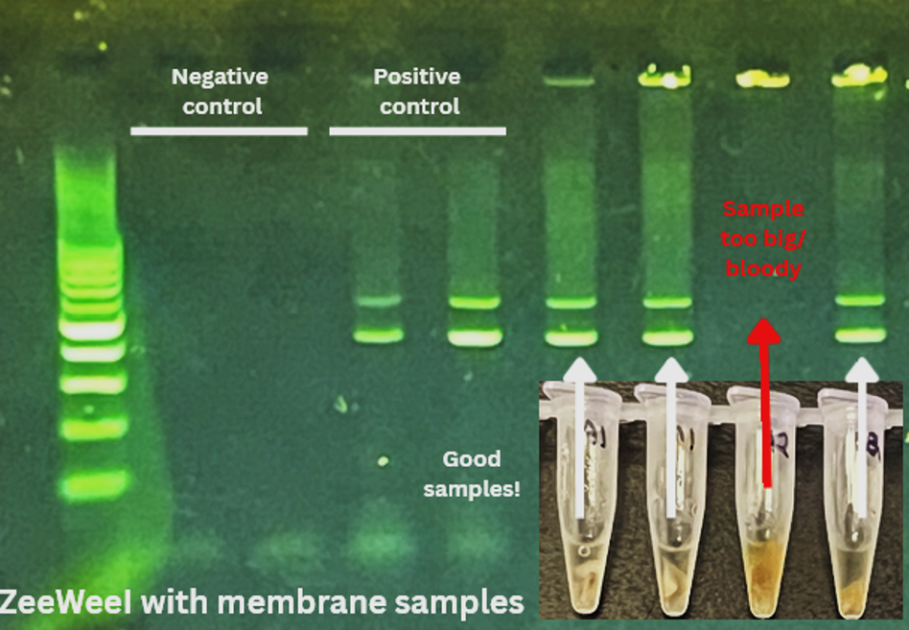
These images show examples of results from the ZeeWee™ I Bird DNA Sex Test.

- Negative Controls: samples with no DNA, showing no amplification, as expected.
- Positive Controls: we used DNA from known female blood samples to ensure the test is working correctly.
Getting DNA from eggshell membranes can be tricky. Too small a piece (like in the top gel) or too large/blood-rich a piece (bottom gel) can prevent amplification.
For best results, we recommend using blood blotted on filter or printer paper, or a freshly plucked feather. While eggshell membrane extraction is possible, it requires more practice and precision.
Try your hand at eggshell membrane extraction!
This eggshell sampling method can be used with all our chicken DNA tests!
- ZeeWee I Bird DNA Sex Test
- Blue Egg Gene Chicken DNA Test
- Recessive White Chicken DNA Test
- Lavender Chicken DNA Test
- … and more to come!
If you need additional help or have questions, please contact our team.