

Teaching students about positive and negative controls in biology
Imagine you are running an experiment and when you look at the results, you see….nothing? What could have happened? Maybe your lab equipment malfunctioned, or you made a mistake following the lab protocol. Or everything went right, and this is the actual experimental result. Including the right experimental controls will allow you to be more confident in interpreting the results.
Why are experimental controls important?
Controls help scientists interpret their results confidently and determine whether a result is due to an actual biological phenomenon rather than experimental error or other factors. This post explains the two main types of control samples and provides examples to help students better understand the role of controls.
| Positive control | Negative control | |
| Basic definition | A sample or condition that generates a known positive result using the experimental procedure. | A sample or condition known to generate a negative result using the experimental procedure. |
| Function |
|
|
What are examples of positive and negative controls?
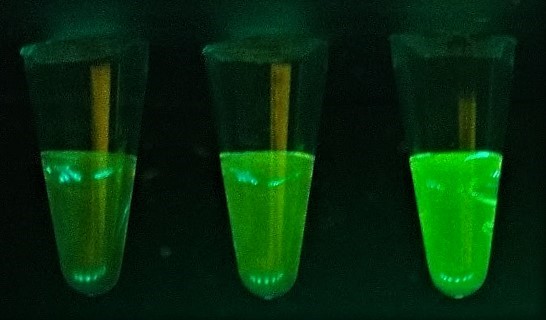
Imagine you are testing patient samples for a specific virus. A negative test result could mean the person isn’t infected. But it could also mean your test isn’t working, for example, because the reagents are expired. Including a positive control sample will allow you to identify when experimental error leads to a negative result. In this experiment, you could include a sample that had already been confirmed to test positive for the virus. If this positive control sample does not generate a positive result, you know something is wrong with your experiment or reagents.
Now, assume you get a positive test result for a patient sample. A positive test result could mean the person is infected, or that the sample was contaminated, for example, by using a glove that had the virus on it. A negative control sample can confirm the absence of contamination. In this experiment, the negative control sample would contain all the reagents used in the viral detection test, except for a patient sample. If your negative control sample tests positive for the virus, it suggests contamination, and you must clean everything before repeating the experiment.
Once your students understand the different types of controls and why they are essential, they will be well on their way to designing scientifically sound experiments and obtaining data they can be confident in!
Related resources:
miniPCR bio Learning Labs that use positive and negative controls