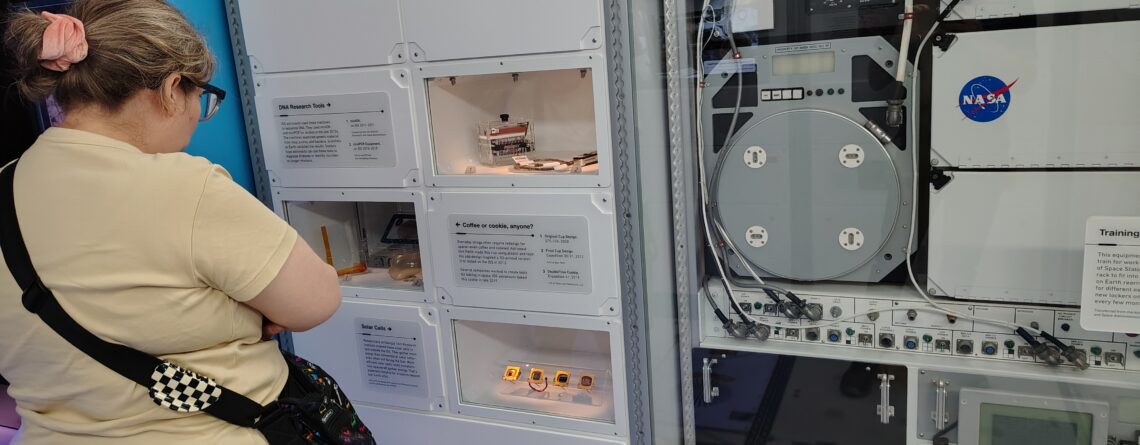
miniPCR Thermal Cycler Enters Permanent Collection of the Smithsonian National Air and Space Museum
Classroom-accessible genetic analysis technology that enabled the first DNA amplification and CRISPR gene editing in space joins the new “At Home in Space” exhibition.
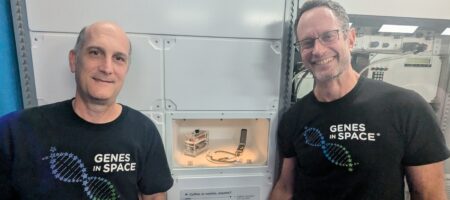
CAMBRIDGE, Mass. & WASHINGTON, D.C. — November 2, 2026 — miniPCR bio™, a pioneer in accessible molecular biology tools, today announced that an authentic, spaceflight-returned miniPCR® thermal cycler has officially entered the permanent collection of the Smithsonian National Air and Space Museum. The hardware will be displayed as part of the museum’s new exhibition, At Home in Space, which highlights the technologies and scientific innovations that enable sustained human habitation in low Earth orbit.
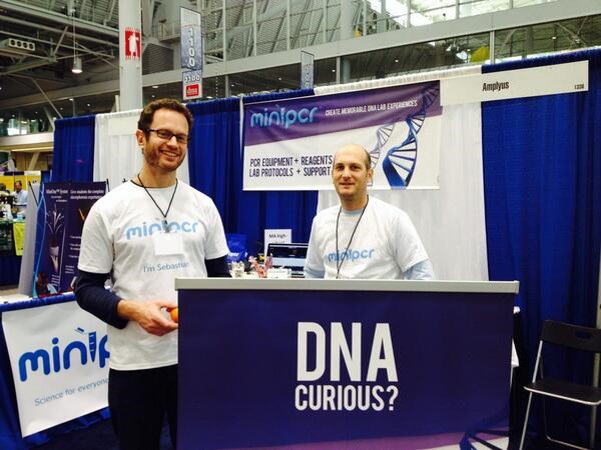
Originally piloted in a Cambridge basement by miniPCR bio co-founders Sebastian Kraves and Ezequiel Alvarez Saavedra, the miniPCR was created to break down barriers to molecular biology by making DNA analysis tools portable, durable, and intuitive for classrooms and field researchers. In 2014, the hardware caught the attention of aerospace engineers at Boeing seeking rugged, energy-efficient molecular tools capable of operating in microgravity.
The induction honors more than a decade of pioneering orbital biology. Prior to the miniPCR’s deployment, biological research aboard the International Space Station (ISS) required freezing samples and returning them to Earth on cargo capsules for analysis months later. The arrival of miniPCR aboard the station transformed orbital research by enabling real-time DNA amplification directly in microgravity.
Key milestones achieved by the miniPCR system include:
-
First DNA Amplification in Space (2016): British astronaut Tim Peake used the miniPCR to successfully amplify genetic material off-planet for the first time, executing an experiment designed by 16-year-old Anna-Sophia Boguraev.
- First Molecular Diagnostic on Orbit (2017): High school student Julian Rubinfien designed an assay to amplify and analyze telomeres—the protective caps at the ends of chromosomes—establishing a method with a direct visual readout to investigate the genetic drivers of accelerated aging and cellular degradation in astronauts.
-
First CRISPR Gene Editing in Orbit (2019): Designed by four Minnesota high school students, the experiment marked the first time genome editing was performed in space, examining how cells repair radiation-damaged DNA.
-
Operational Environmental Monitoring: The hardware laid the foundation for routine, on-orbit microbial and environmental sequencing led by NASA researchers, including Dr. Sarah Wallace, safeguarding crew health and station water systems.
-
Student-Driven Discovery via Genes in Space: Developed in founding partnership with Boeing and supported by New England Biolabs and the ISS National Laboratory, the Genes in Space program has engaged more than 13,000 U.S. middle and high school students, sending 12 student-designed investigations to the ISS and yielding nine peer-reviewed scientific publications.
“When we founded miniPCR bio, our mission was to bring DNA discovery to everyone, everywhere—focusing on classrooms, rural settings, and field stations. We never imagined orbit,” said Sebastian Kraves, co-founder of miniPCR bio. “Seeing this small, transparent device in a Smithsonian glass case alongside Apollo artifacts and icons of flight history is profoundly moving. It shows us that the scientific frontier belongs to anyone with the curiosity to ask a fearless question.”
“Seeing this instrument at the museum underscores how far space biology has come in just a few years, and how much farther the next generation of explorers and scientists will take it,” said Zeke Alvarez Saavedra, co-founder of miniPCR bio. “We’re thrilled to see this essential piece of Genes in Space history become part of the Smithsonian’s collection.”
The miniPCR thermal cycler is now on public view in the At Home in Space gallery at the National Air and Space Museum on the National Mall in Washington, D.C.
For more information on miniPCR bio and the history of DNA exploration in space, visit www.minipcr.com. To learn more about the student research competition, visit www.genesinspace.org.
About miniPCR bio™
miniPCR bio creates tools and curricula that make molecular biology accessible to everyone, everywhere. Headquartered in Cambridge, Massachusetts, miniPCR bio equips educators, students, and field scientists globally with portable, rugged, innovative equipment for DNA and RNA analysis. Learn more at www.minipcr.com.
About Genes in Space
Genes in Space is an annual competition that challenges students in grades 7 through 12 to design real-world DNA experiments addressing the challenges of space exploration. Founded in 2015 by miniPCR bio and Boeing, with major support from the ISS National Laboratory and New England Biolabs, the program provides winning students with the opportunity to have their experiments conducted by astronauts aboard the International Space Station.
Media Contact:
miniPCR bio
+1 (781) 990-8727