
Looking for biotechnology labs that align with the updated AP Biology CED?
The AP Biology Course and Exam Description (CED) has been updated, with the new standards taking effect in the 2025–2026 school year. While biotechnology remains listed as Topic 6.8, it cannot be effectively taught as a single, standalone unit. Biotechnology is integral to scientific discovery, and as AP Biology students learn to investigate and answer scientific questions, a solid understanding of biotechnological methods is essential to the process.
At miniPCR bio, we have always believed that biotechnology can be used to enhance the teaching of a variety of concepts throughout the AP Biology curriculum. Our inquiry-based, hands-on lab investigations allow students to address AP Biology topics while also using all of the Science Practices, including Concept Explanation, Visual Representation, and Argumentation.
Here are a few examples of labs that align with the updated AP Biology framework:
- Unit 1: Chemistry of Life: DNA Glow Lab™: Exploring DNA Structure
- Move beyond paper models and investigate DNA structure directly! Investigate how DNA sequence, temperature, and pH interact to maintain the structure of the double helix.
- Unit 3: Cellular Energetics: P51™ Enzyme Lab: ꞵ-Gal Glow™
- Conduct five inquiry investigations of enzyme activity. Measure the effect of pH, temperature, concentration, and competitive inhibition on reaction rates.
- Unit 5: Heredity: Inherited Cancer Risk: Lynch Syndrome
- Discover how genetic testing can diagnose hereditary cancer risk. Students will analyze gel electrophoresis results to diagnose members of a fictional family and track inheritance through pedigrees.
- Unit 6: Gene Expression and Regulation: BioBits®: Central Dogma
- Cell-free technology and fluorescent outputs allow students to directly visualize the flow of genetic information, from DNA to RNA to protein, all in real-time and with minimal preparation.
- Unit 7: Natural Selection: Sickle Cell Genetics Lab: Diagnosing Baby Marie™
- Will baby Marie be affected by sickle cell disease? Use gel electrophoresis to analyze her family’s DNA for the sickle cell allele.
- Unit 8: Ecology: Conservation Genetics: Discovering Lemur Diversity
- Scientists working in the forests of Madagascar may have rediscovered a species of lemur that was thought extinct. Analyze authentic field data and perform gel electrophoresis to make the call.
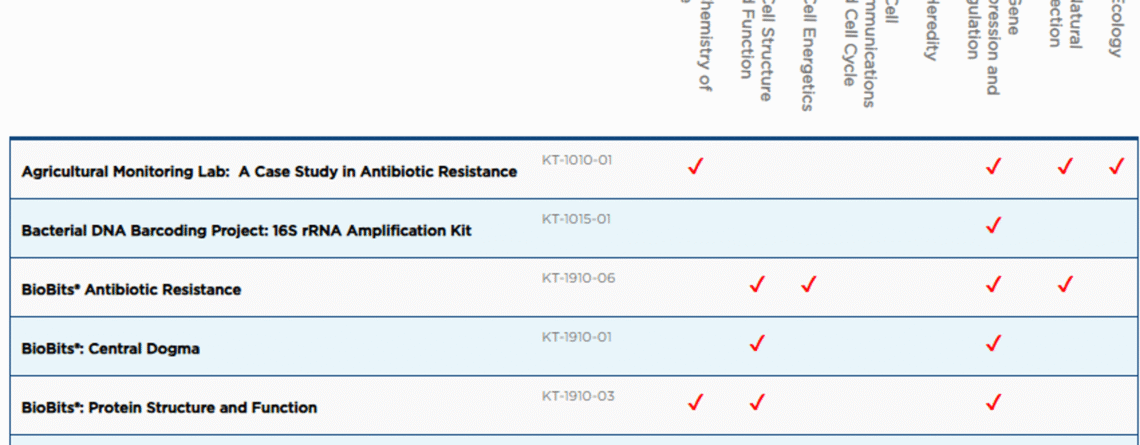
For a full breakdown showing how our Learning Labs align to the AP Biology units, see the table below.
For a detailed list of frameworks and AP Biology science practices that each lab is aligned to, see the Standards Alignment Guide for any lab (free to download from each lab’s webpage). Still have questions? Sign up for a free virtual consultation here.